


Toyota Diesel 3L 1988–1997 Hilux HiAce Land Cruiser Prado Cylinder Head Replacement Package
Toyota Diesel 3L 1988–1997 Hilux HiAce Land Cruiser Prado Cylinder Head Replacement Package
SKU:
Couldn't load pickup availability
Product Overview
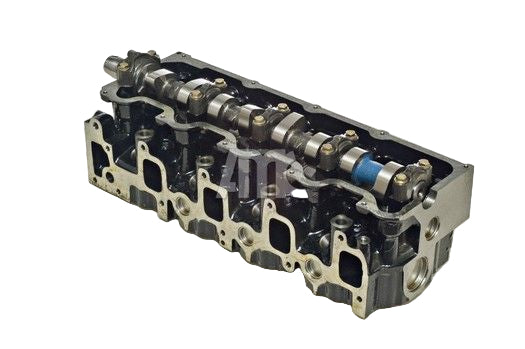
Complete cylinder head replacement package for the Toyota 3L 2.8L naturally aspirated diesel engine, combining every critical component needed for a single-disassembly rebuild: AMC complete loaded cylinder head, OEM complete engine overhaul gasket set, ARP head stud set, and OEM glow plug set. This bundle eliminates the sourcing risk, parts delays, and second-order costs that derail 3L head jobs. Everything required to properly seal, fasten, and start the engine reliably after a head replacement arrives in one package. Compatible with 1988–1997 Toyota Hilux, HiAce, Land Cruiser 70 Series, Prado, and Dyna applications with the 3L 2.8L diesel.
OEM Part Numbers in This Bundle:
- 11101-54131 (Cylinder Head)
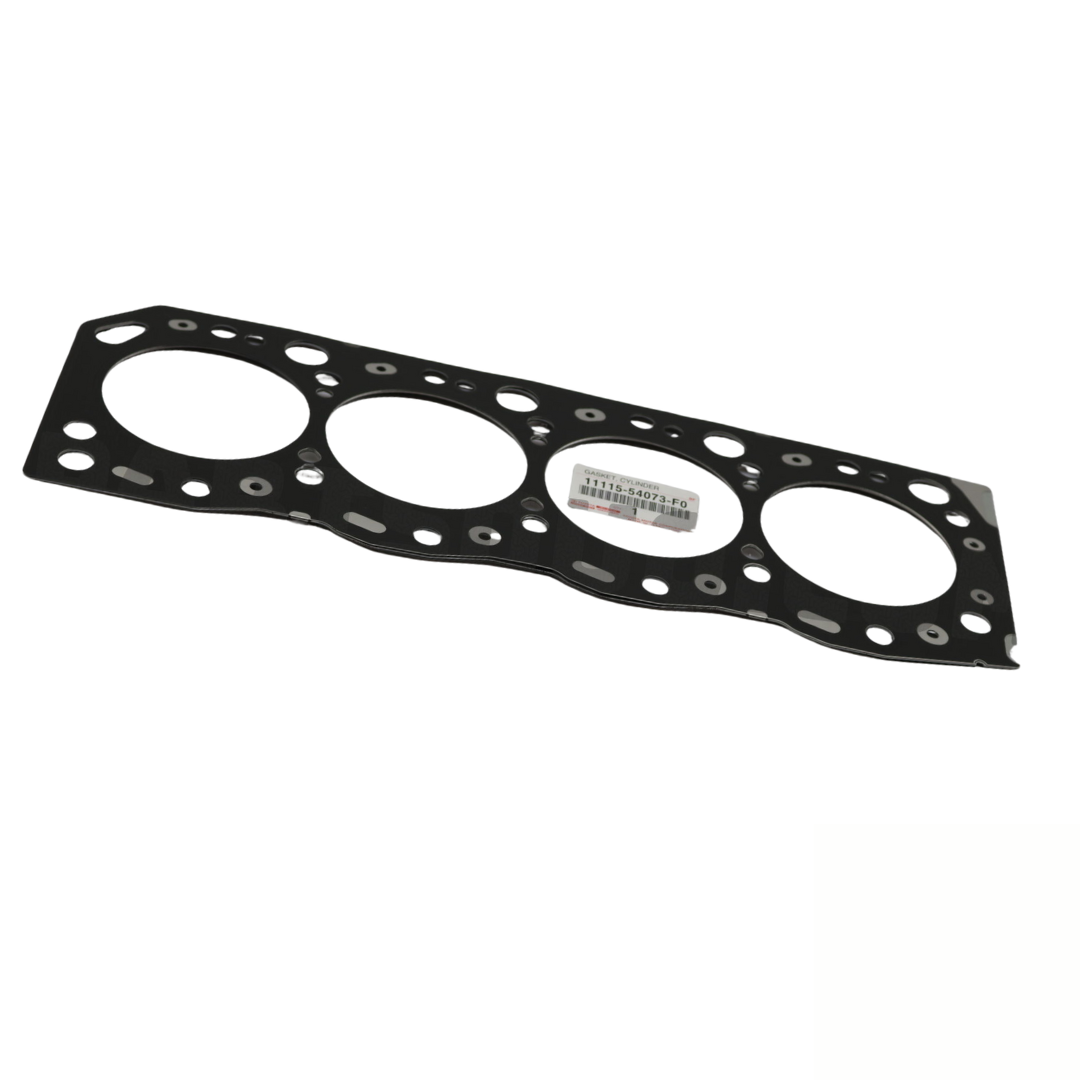
- 11115-54073 (Head Gasket)
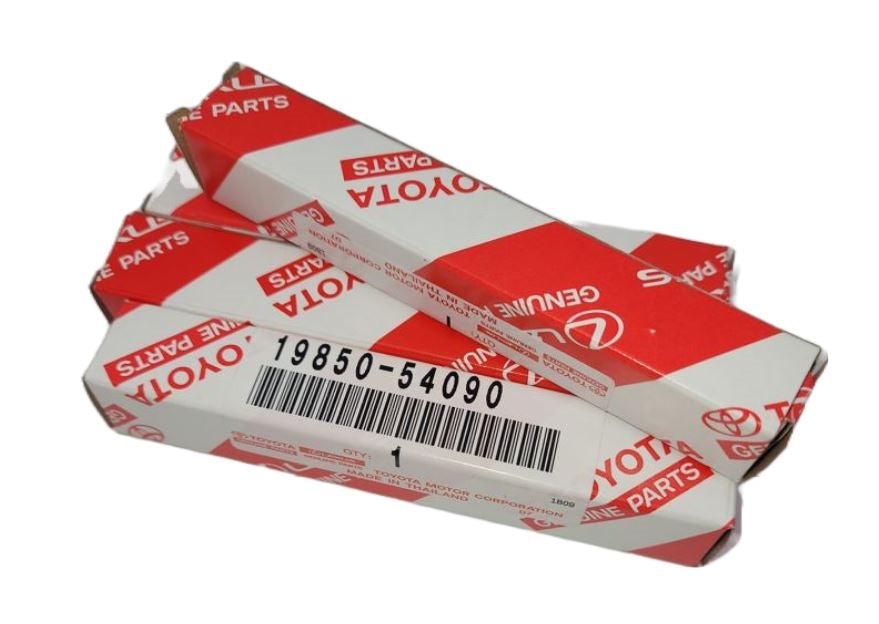
- 19850-54090 (Glow Plug Set)
- 90910-02080 / 90910-02081
What's Included in This Package
| Component | Part / Specification | Quantity |
|---|---|---|
| AMC Complete Loaded Cylinder Head | 11101-54131 — pre-assembled with camshaft, valves, valve springs, valve guides, valve seats, and pre-chambers | 1 |
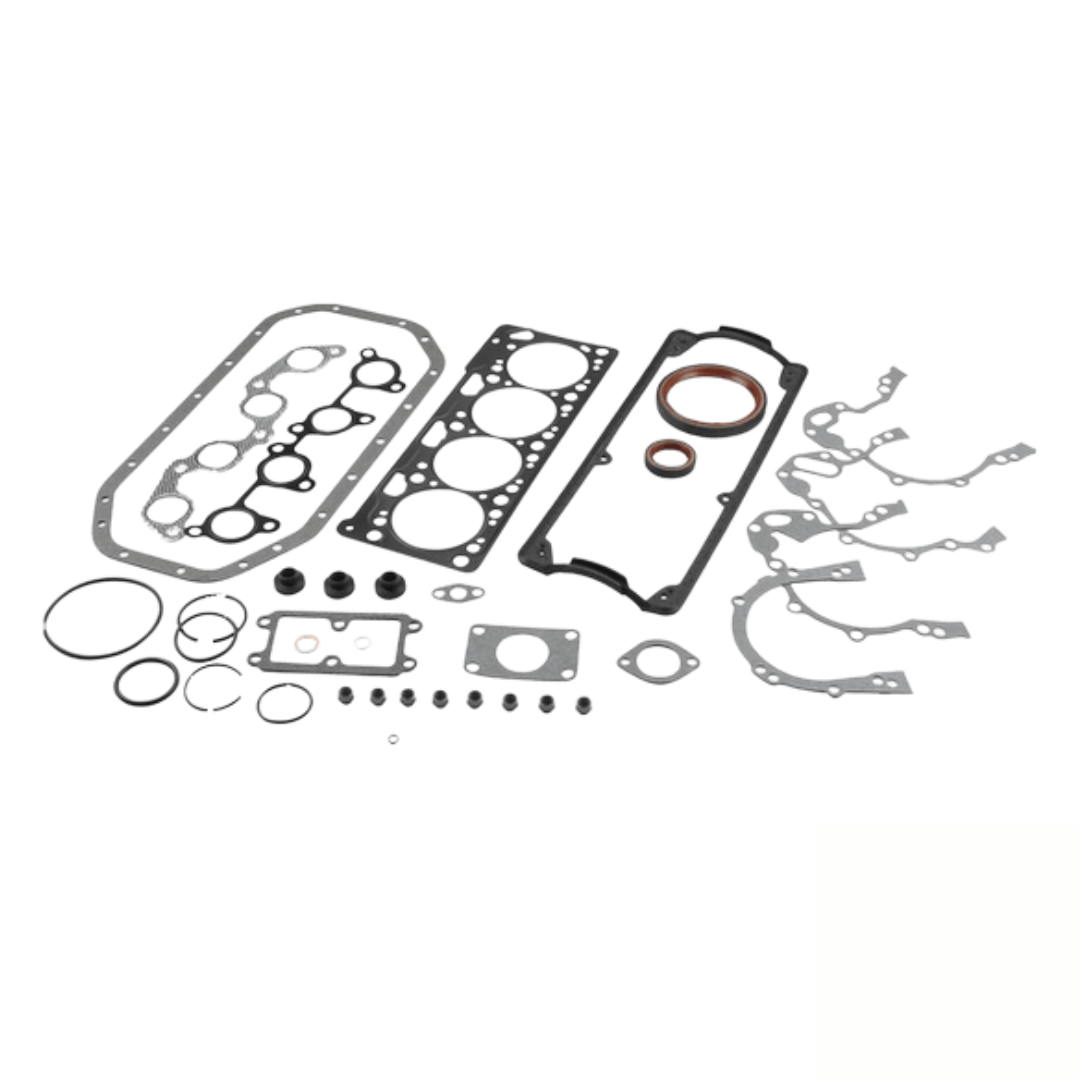
| Complete Engine Overhaul Gasket Set | Full set including head gasket (11115-54073), valve cover, intake/exhaust manifold, oil pan, timing cover, thermostat, crankshaft seals, valve stem seals, injector O-rings | 1 set |
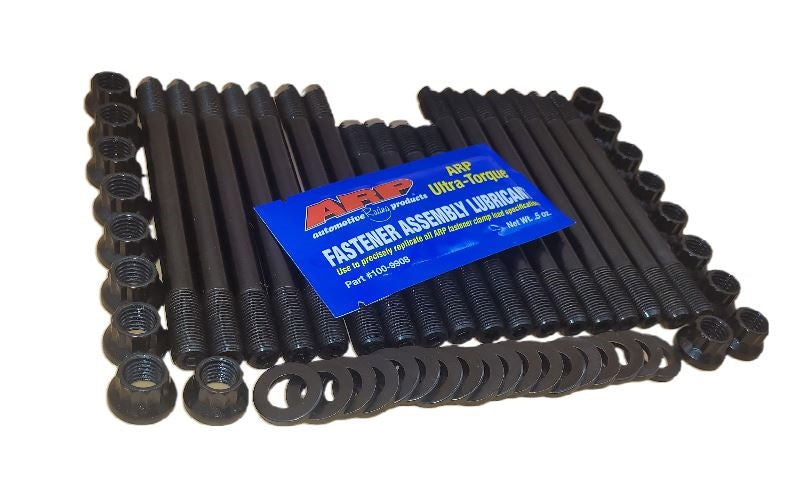
| ARP Head Stud Set | 18-stud complete kit — ARP alloy studs, parallel-ground hardened washers, ARP Ultra-Torque lubricant | 1 set (18 studs) |
| OEM Glow Plug Set | 19850-54090 | 4 plugs |
Key Features & Benefits
- Eliminates Repeat Head Gasket Failure: ARP studs rated at 220,000 PSI tensile strength deliver a clamping force that the factory TTY bolts cannot sustain, the single most effective upgrade against recurring head gasket failure on the 3L diesel platform
- New Head Casting — No Machining Gamble: The AMC completely loaded cylinder head (11101-54131) is a brand-new casting, eliminating the warpage, cracking, and valve seat wear common to used or reconditioned heads. Pre-assembled with valves, springs, camshaft provisions, and pre-chambers for direct installation
- Every Gasket and Seal Covered in One Kit: The complete overhaul gasket set addresses every sealing point from the combustion chamber to the sump — no second orders mid-build, no missed seals, no return trips to the parts counter after reassembly
- Starts Reliably from Day One: Fresh OEM glow plugs (19850-54090) ensure the 3L achieves proper combustion temperatures on cold starts immediately after rebuild — often overlooked during head jobs, yet critical for smooth operation and long-term injector health
- Correct Specifications for the Naturally Aspirated 3L: All components in this package are specifically matched to the Toyota 3L 2.8L non-turbo engine. Not universal kit components adapted from other applications
Technical Specifications
Bundle Type: Complete Cylinder Head Replacement Package
Engine Compatibility: Toyota 3L 2.8L naturally aspirated diesel (code: 3L)
Displacement: 2,779cc (2.8L)
Engine Configuration: Inline-4, SOHC, 8-valve, indirect injection
Cylinder Bore: 96.0 mm | Stroke: 96.0 mm
Compression Ratio: 22.2:1
Cylinder Head Material: Cast iron (AMC improved metallurgy)
Cylinder Head Weight: Approximately 40 kg (88 lbs)
Valve Configuration: 8-valve SOHC, direct tappet (solid, shim-adjusted — no hydraulic lifters)
Head Gasket Grade Options: B0 / D0 / F0 (MLS construction, 97mm nominal bore)
Head Stud Material: ARP alloy steel, 220,000 PSI tensile strength, black oxide finish
Head Stud Quantity: 18 studs (complete set)
Head Stud Nut Style: 12-point (requires 12-point deep socket)
Glow Plug Voltage: 11V (12V system compatible)
Glow Plug Thread: M10 × 1.25mm | Overall Length: 90.4mm
Glow Plug Heat-Up Time: Approximately 7 seconds
Glow Plug Tightening Torque: 10–18 Nm (7–13 ft-lbs)
Fitment
| Year | Model | Engine |
|---|---|---|
| 1988–1997 | Toyota Hilux / Pickup (LN106, LN107, LN130, LN131) | 3L 2.8L naturally aspirated diesel |
| 1988–1997 | Toyota HiAce (LH100, LH107, LH113, LH115) | 3L 2.8L naturally aspirated diesel |
| 1988–1997 | Toyota HiAce Van / Wagon (LH120, LH123, LH125, LH129) | 3L 2.8L naturally aspirated diesel |
| 1988–1997 | Toyota HiAce Van (LH51, LH57, LH61) | 3L 2.8L naturally aspirated diesel |
| 1990–1996 | Toyota Land Cruiser 70 Series (LJ70, LJ71, LJ78) | 3L 2.8L naturally aspirated diesel |
| 1988–1997 | Toyota Land Cruiser Prado (LJ70, LJ71, LJ78 Series) | 3L 2.8L naturally aspirated diesel |
| 1988–1995 | Toyota 4Runner / Hilux Surf (LN130) | 3L 2.8L naturally aspirated diesel |
| 1988–1997 | Toyota Dyna / ToyoAce (LY51, LY61, LY101, LY121) | 3L 2.8L naturally aspirated diesel |
| 1995–2002 | Toyota Grand HiAce / Granvia | 3L 2.8L naturally aspirated diesel |
Important: This package is designed exclusively for the Toyota 3L naturally aspirated diesel (2,779cc). It is not compatible with the 3L-T turbocharged variant, the 2L family (2,446cc), or the 5L (2,986cc). Verify your engine code stamped on the block before ordering — a 3L engine will show "3L" followed by a serial number. The 3L-T adds a turbocharger and uses different gasket grades and boost-rated head components. If you are unsure of your engine code, check your chassis plate or provide your VIN for verification.
Installation & Maintenance
Installation Difficulty: Expert / Professional
Tools Required: Complete engine rebuild toolkit, torque wrench (capable of 90 ft-lbs minimum), 12-point deep socket for ARP stud nuts, thread chaser set, stud setter tool, valve clearance feeler gauges and shim set, surface plate or precision straight-edge (max allowable 3L head warpage: 0.05 mm), 12mm socket for glow plug removal/installation, engine crane or stand recommended
Professional Installation: Mandatory — the 3L head replacement requires machine shop assessment of head flatness and valve seat condition, correct multi-stage ARP torque sequencing, and valve clearance adjustment. DIY builds without a straight-edge check and a torque wrench risk immediate re-failure.
Critical Installation Sequence for This Bundle:
- Step 1 — Head deck inspection: Even with a new AMC head, verify the block deck flatness before installation. A warped block will destroy a new head gasket regardless of head quality. Toyota's maximum allowable warpage is 0.05 mm.
- Step 2 — Chase all block stud threads: Clean block thread bores with a thread chaser (not a tap) before installing ARP studs. Debris causes false torque readings that under-clamp the gasket.
- Step 3 — Install ARP studs hand-tight only: Thread each stud in hand-tight, then back out slightly until the stud tip is flush with the top of the installation nut. This positions the stud for pure tensile loading when torqued — no torsional stress, more accurate and consistent clamping across all 18 positions.
- Step 4 — Torque ARP nuts in stages using ARP Ultra-Torque lubricant: Apply lubricant to stud threads, washer face, and nut bearing surface. Torque in increments of 30, 60, and 90 ft-lbs in Toyota's factory sequence. Do not use Toyota's OEM bolt torque values—the ARP specification is different. Do not exceed 100 ft-lbs.
- Step 5 — Adjust valve clearances: The 3L uses solid tappets — there are no hydraulic lifters. Valve clearance must be set by shim adjustment after the head is installed. Do not skip this step; incorrect clearances cause misfiring and accelerated valve train wear.
- Step 6 — Install glow plugs last: Thread glow plugs with anti-seize compound and torque to 10–18 Nm using a 12mm socket. Never use an impact wrench — glow plug thread damage in cast iron heads is expensive to repair.
Maintenance Tips:
- Flush and refill the complete cooling system with fresh Toyota-spec coolant on reassembly — degraded coolant is the primary cause of 3L overheating and repeated head failure
- Replace the timing belt and water pump during this job — they are accessed during the same disassembly, and their service interval typically aligns with a head job on high-mileage 3L engines
- Perform a coolant pressure test and oil analysis at 500 km / 300 miles post-rebuild to confirm head gasket integrity before returning the vehicle to full-load operation
- ARP studs are reusable across subsequent rebuilds — inspect for elongation or thread damage before reinstalling in any future engine work
- Adjust valve clearances every 30,000 km on the 3L engine as part of routine maintenance to prevent premature valve train wear
Frequently Asked Questions
Q: Why does this bundle include ARP head studs instead of OEM head bolts?
A: Toyota's factory head bolts on the 3L diesel are torque-to-yield (TTY) fasteners that stretch plastically during installation and must be replaced after every head removal. More critically, TTY bolts provide lower clamping force than ARP alloy studs, which are heat-treated to 220,000 PSI tensile strength. Insufficient head clamping force, particularly on an engine that has experienced an overheating event, is the primary cause of repeat head gasket failure. ARP studs maintain higher, more consistent clamping force through the engine's thermal cycles, are reusable across multiple rebuilds, and directly address the root cause of recurrent failure rather than resetting the conditions for it.
Q: Is the AMC cylinder head a bare casting or a complete assembly?
A: This bundle includes the Complete Loaded variant of the AMC cylinder head, which comes pre-assembled with the camshaft provisions, valves, valve springs, valve guides, valve seats, and pre-chambers installed. It is ready to install without additional valvetrain sourcing. The 3L cylinder head requires post-installation valve clearance adjustment with shims, as the engine uses solid tappets rather than hydraulic lifters.
Q: Does this package work for the turbocharged 3L-T engine?
A: No. The 3L-T turbocharged variant requires different boost-rated gasket grades and different head specifications. This package is designed specifically for the naturally aspirated 3L diesel. If your engine is turbocharged, verify the engine code (3L-T) and contact us for the correct parts for your application. The easiest check is the engine identification plate on the block; naturally aspirated engines show "3L", turbo variants show "3L-T".
Q: Why are glow plugs included in a cylinder head replacement package?
A: When the cylinder head is removed for replacement, glow plugs are fully exposed and easily accessible. Glow plugs on 3L diesel engines that have overheated are often seized, damaged, or nearing the end of their service life. Replacing them during a head job adds minimal time and cost compared to the alternative — discovering failed glow plugs after reassembly, which requires partial disassembly of the intake area for access. Fresh OEM glow plugs (19850-54090) also ensure the engine returns to reliable cold-start performance immediately after rebuild rather than requiring a separate service call.
Q: How do I confirm my Toyota has a 3L engine and not a 2L, 5L, or 3L-T?
A: The engine code is stamped on the front of the block, typically near the top on the driver's side. A naturally aspirated 3L reads "3L" followed by a serial number. The 2L family displaces 2,446cc (smaller bore), the 5L displaces 2,986cc (larger), and the 3L-T adds a turbocharger to the 3L block. You can also cross-reference the chassis plate — Toyota's LJ-series (LJ70, LJ71, LJ78) and LN-series (LN106, LN130) chassis codes indicate 3L applications in most markets.
Q: What additional parts should I consider alongside this bundle?
A: The timing belt and water pump are the most important additions. Both are accessed during the cylinder head removal and share disassembly time; replacing them at this point costs only parts, not extra labor hours. A thermostat replacement is also recommended, as a failed thermostat is one of the leading causes of 3L overheating that triggers head failure in the first place. A valve shim set is required for proper valve clearance adjustment after head installation.
Related Toyota Parts You May Need
- Timing Belt Kit — Replace during cylinder head service; the 3L timing belt drives both the camshaft and injection pump and is fully accessible during head removal. Skipping it during this job creates a future labor overlap that costs significantly more to address separately
- Water Pump — The most common cause of 3L overheating and repeat head failure; accessed during the same disassembly as the cylinder head. A failing impeller or weeping shaft seal may not be visible externally until it causes a heat event that destroys the new head gasket
- Thermostat Assembly — A stuck-closed thermostat causes rapid overheating on first startup after rebuild; this is the cheapest and most overlooked component that prevents a complete rebuild from being immediately undone
Common Symptoms That Indicate a 3L Cylinder Head Replacement Is Needed
- White smoke from the exhaust on startup or under load — coolant entering and burning in the combustion chambers through a failed head gasket or cracked head
- Milky or frothy engine oil on the dipstick or under the oil filler cap — coolant and oil mixing through an internal head gasket breach or head crack
- Coolant loss with no visible external leak — coolant being consumed internally through the combustion chamber or entering the oil system
- Repeated overheating despite full coolant and a serviced cooling system — combustion gases escaping through the head gasket into the coolant circuit, reducing cooling capacity and pressurizing the reservoir
- Bubbles are visible in the coolant reservoir when the engine is running — exhaust gas is pressurizing the cooling system through a compromised head gasket seal
- Hard cold starts combined with white smoke — often indicate both a failing head gasket and degraded glow plugs, a common combination on high-mileage 3L engines that have experienced heat events
Why This Bundle Is the Right Solution for a 3L Diesel Head Replacement
The Toyota 3L diesel is a proven, mechanically simple engine that can deliver hundreds of thousands of kilometers of reliable service when properly maintained. Its vulnerabilities are well-documented: head gasket failure driven by cooling system neglect, followed by a repair that reuses OEM TTY bolts — which sets up the exact conditions for the same failure within another 50,000–100,000 km. This bundle exists to break that cycle.
The AMC cylinder head (11101-54131) addresses the casting-side variables — a brand-new head with verified flat deck geometry, properly conditioned valve seats, and correct pre-chamber dimensions replaces the uncertainty of a used or warped original casting. No machine shop roulette, no hidden cracks, no worn valve guides.
The ARP2000 head stud set addresses the clamping force problem directly. Factory TTY bolts on the 3L achieve adequate clamp load when new, but they are single-use, stretch-limited fasteners. After one overheating cycle, the head and block experience micro-distortion that reduces effective clamping at OEM torque values. ARP2000 studs — rated at 220,000 PSI — maintain higher, more consistent clamping force through thermal cycling. They are reusable across future rebuilds, making them a permanent upgrade rather than a consumable item.
The complete gasket set eliminates the risk of discovering secondary leaks at the valve cover, sump, or injector bores days after reassembly. On a high-mileage 3L that has experienced an overheating event, every rubber seal in the engine has been heat-stressed. Addressing them during the single disassembly event costs a fraction of the labor for a second teardown.
Fresh OEM glow plugs (19850-54090) complete the rebuild with reliable cold-start ignition. A 3L with three functioning glow plugs starts hard in cold weather, runs rough during warm-up, and forms unburned fuel deposits that accelerate injector wear. Glow plug replacement during head service costs minutes, not hours.
Don't rebuild the Toyota 3L halfway. Every component in this package is matched to the engine's specific requirements, sourced from AMC and genuine OEM production runs, and selected to address the documented failure modes that bring 3L diesels to the workbench in the first place. Order once, rebuild correctly, and return this engine to the service life it was designed to deliver.
Share